


IEQ Team Session
Most teams only use a fraction of the intelligence in the room. This session changes that.
A 2-hour online session that reveals who’s truly included in your team’s thinking, deciding, and learning and gives you research-backed methods to include everyone, starting immediately.

The people in your team are capable of more than your current structures allow
In most teams, a handful of people carry the conversation. They speak up, steer decisions, set the tone. And the rest? They adapt. Listen politely. Nod along. Gradually disengage.
That’s rarely because they don’t care. It’s because the way the team comes together only really works for a few people. The meeting formats, the decision-making habits, the interaction patterns: they were inherited, never designed. And they quietly exclude most of the room.
Over time, people stop trying. They show up, but they’ve checked out long ago.
Sound familiar?
-
“We make decisions together.” In practice, most people only hear the decision after it’s already been shaped by two or three voices.
-
“Everyone is welcome to speak up.” And yet, without structure, the same people dominate every single time.
-
“Let’s do an engagement survey.” People fill it out. Results land in a report. The way the team interacts? Stays exactly the same.
-
“We need to build trust first.” But trust doesn’t come from talking about trust. It comes from being genuinely included.
This is the invisible pattern behind disengagement: people don’t check out because they lack motivation. They check out because they were never truly checked in.Engagement grows out of inclusion. Without inclusion, all the motivation in the world won’t land.
The research is clear on this. And the numbers are uncomfortable.

77% of employees worldwide are disengaged at work. Most of them would like to contribute more. The structures around them simply don't invite it.

Psychological safety is the single most important factor for team effectiveness. More important than skills, seniority, or resources. When people feel safe to speak up, ask questions, and disagree, teams perform better on every metric.

70% of the variance in team engagement comes from how people interact. Individual talent, motivation, and perks barely move the needle. What matters is the structure: who gets heard, who participates, and who quietly gives up.
What if you could see exactly who's being included, who isn't, and change it in the same session?
That’s what the IEQ Team Session does. Make inclusion visible. Practice it together. In two hours.
The IEQ: a sharp lens on who's truly included
The Inclusion & Engagement Quotient (IEQ) measures something most teams never make explicit: the degree to which people are genuinely included in thinking, deciding, and learning together. In the lived, daily experience of collaboration. Where it actually matters.
The IEQ is inspired by the original IEQ framework from Liberating Structures (Lipmanowicz & McCandless, 2014), and enriched with insights from research on psychological safety (Edmondson, 1999), employee engagement (Gallup), and participative decision-making.
Every team member fills in the IEQ-assessment individually before the session. You receive a total IEQ score plus a mini-IEQ score per theme. Together they give you an honest snapshot of your team’s interaction culture. A starting point for a real conversation, not a judgment.
The results are grouped into five themes:

Collaboration & Interaction

Inclusion & Equality

Psychological Safety & Trust

Engagement & Ownership

Learning & Development
What happens in the 2-hour session
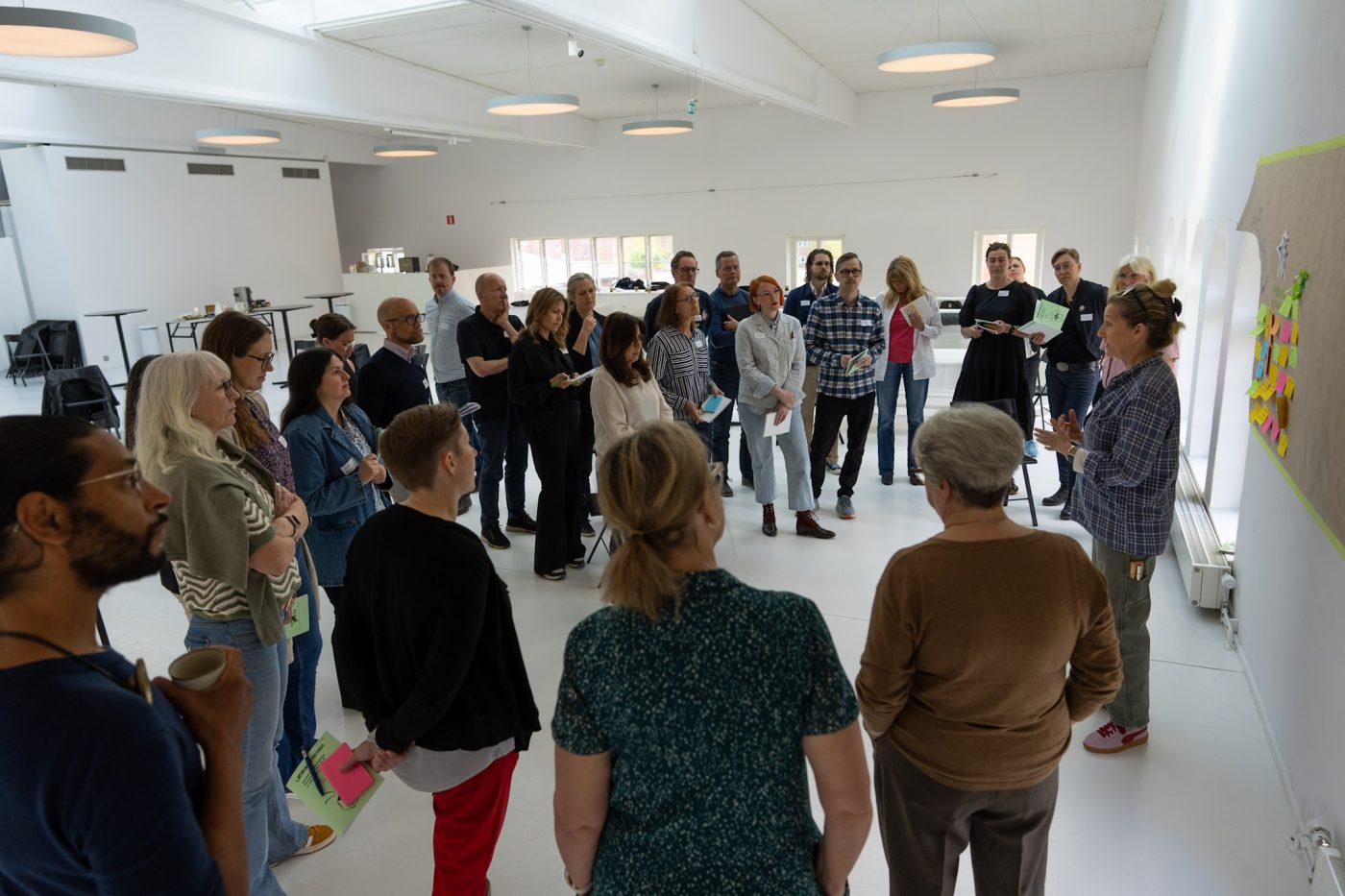
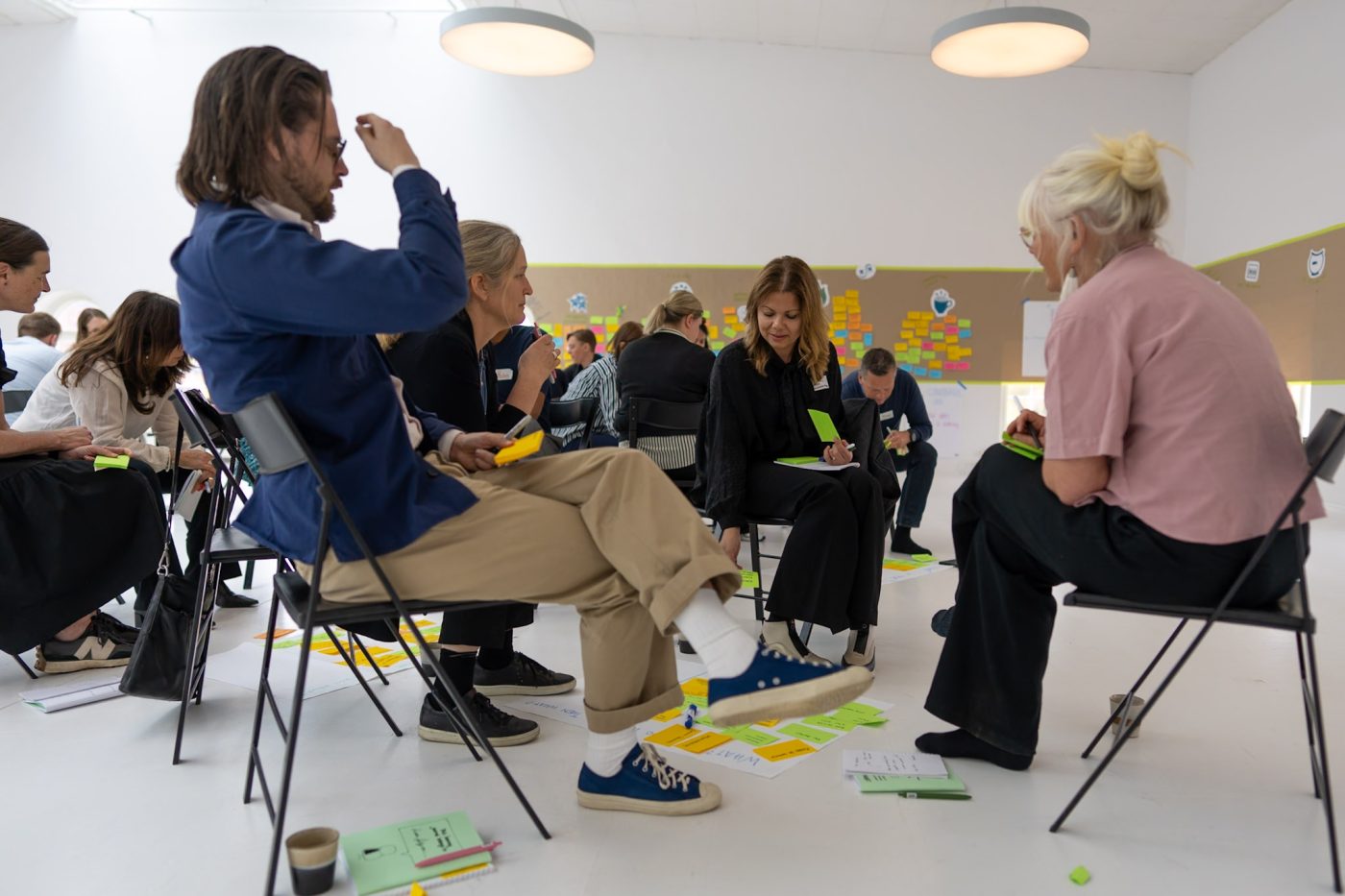
This is a working session, not a presentation about your scores. Your team experiences better collaboration while improving it.
1. Explore your team’s IEQ results together
We look at the total score and each mini-IEQ theme together. Where does the team score well? Where is there friction? And perhaps most interesting: where do individual scores differ from the team average? That gap alone opens up powerful conversations about how differently people can experience the same team.
2. Practice concrete methods for each theme
Starting from the lowest-scoring theme, we work our way up. For each theme, your team practices a specific method from the Liberating Structures repertoire, a proven set of interaction patterns used by thousands of teams worldwide. You don’t just hear about these methods. You experience them. And in doing so, your collaboration already starts to shift during the session itself.
3. Formulate your own next steps
No external advice that gathers dust. Your team formulates its own concrete improvement actions, with full engagement and agreement from everyone involved. The people who do the work get to shape how they work together.
What makes this different
Most feedback exercises end with a report. The IEQ Team Session is different because you diagnose and practice in the same session. You leave with experience, not just insights.
The methods come from Liberating Structures, a collection of evidence-informed interaction patterns developed by Henri Lipmanowicz and Keith McCandless. They’re designed to include everyone, distribute participation, and generate collective intelligence. Teams in healthcare, education, government, tech, and many other sectors use them daily.
The IEQ doesn’t measure personality, satisfaction, or HR policy. It focuses on what actually shapes your results: how people interact, decide, and learn together in practice.
- Not an engagement survey that measures symptoms
- Not a personality assessment or team type exercise
- Not a workshop with theory slides and “takeaways”
- Not dependent on a facilitator coming back every month
What you practice in the session, your team can use the very next day. In any meeting, any project, any conversation.
This session is for you if…
👉🏽 You notice that only a few voices shape what your team thinks and decides
👉🏽 People attend meetings but don’t truly participate. They’re present, sure. Engaged? That’s another story.
👉🏽 Decisions technically happen “together,” but most people don’t feel ownership over them
👉🏽 You sense there’s more intelligence and creativity in your team than what currently surfaces
👉🏽 You’ve tried engagement surveys or team building before. The underlying patterns didn’t change.
👉🏽 You want inclusion to be more than a value on the wall. You want it to be a practical way of working that produces better outcomes.
Get in contact
Book an exploration call to see if the IEQ Teamsession fits your team
"*" indicates required fields


Practical details
Format: Online via Zoom
Duration: 2 hours
Participants: 8-50 persons
Language: English
Investment: 970,-
What you need
- 5-10 minutes of preparation to fill in the IEQ-test
- One device per participant (no sitting together behind one screen, you’ll find out why)
- A stable internet connection and a desktop or laptop (no phones or tablets, sorry)
- No prior knowledge of Liberating Structures required
Why this matters
Our interactions shape our relationships.
Our relationships shape the systems we live and work in.
And systems behave the way they’re structured.
Most collaboration problems aren’t people problems. They’re design problems. And design problems have design solutions.
You don’t need to change everything. You just need to change one structure. One question. One meeting. – This workshop shows you how.
FAQ
Frequently Asked Questions
- How many team members can participate?
- Does everyone need to fill in the IEQ test beforehand?
- What if our scores are low? Will it be uncomfortable?
- Is this only for teams with problems?
- What happens after the session?
How many team members can participate?
The session works well for teams of 8 to 50 people. For larger groups, we can discuss a tailored format.
Does everyone need to fill in the IEQ test beforehand?
Yes. After booking, every team member receives a personal link to the IEQ test. It takes about 10 minutes and the results are automatically aggregated for your team. This is what makes the session so immediately actionable.
What if our scores are low? Will it be uncomfortable?
The methods used in the session are specifically designed to create safety and equal participation. Low scores are actually helpful: they show you exactly where to focus. And the session structure makes sure every voice gets heard.
Is this only for teams with problems?
Not at all. Strong teams use the IEQ to identify their next growth edge. Even high-scoring teams discover themes where small shifts create significant improvements.
What happens after the session?
Your team leaves with a clear, self-formulated action plan. The methods you practiced are yours to keep and use in any meeting. If you want continued support, we can discuss follow-up options.
Ruben Klerkx
About the facilitator
Ruben Klerkx works with teams in healthcare, education, government, and the social sector. As a facilitator, interaction designer, and complexity thinker, he helps groups move from stuck repetitive patterns into more productive, inclusive collaboration by designing better conversations and interactions. by designing better conversations and interactions. His practice centers on Liberating Structures, systems thinking, and complexity science, using these to surface collective intelligence and co‑create solutions.
He runs the Creators Company (Dutch organisation where he focuses on collectivism and community organizing) and he maintains liberatingstructures.info — a multilingual resource platform for Liberating Structures practitioners worldwide.

Get in contact
Book an exploration call to see if the IEQ Teamsession fits your team
"*" indicates required fields